Janitorial wipers in Toronto are the SKU most buyers pick by habit and re-evaluate by accident, usually after a failed swab test or a chemical-compatibility surprise. If you run a food plant, a manufacturing line, a clinic, a long-term care home, a property building, or a cleaning contract route across the GTA, you'll go through more wipers in a month than most offices use in a year. The wiper choice looks small at the SKU level. It compounds across a year into thousands of dollars in chemical waste, audit risk, and labour. This guide covers the four wiper categories (cotton rags, paper centerfeed, microfiber, nonwoven), the GSM and lint specs that decide actual performance, and the color-coded zoning rules that pass a CFIA or hospital audit.
Here is how to pick the right wiper without spending an afternoon comparing case sheets across three vendors.
The four wiper categories

There are four practical wiper categories in commercial use. The category you pick drives lint behavior, absorbency, cost per wipe, and whether the wiper fits a regulated environment.
1. Reusable rags (cotton, terry, huck)
Old-school cotton rags. Cleaned, laundered, reused. Common in hotels and contract cleaning operations.
Pro: lowest cost per wipe over a long horizon if you have laundering scale. Con: lint. Inconsistent absorbency. Contamination risk if not laundered correctly. Laundering cost adds up. Almost never used in food contact zones.
2. Paper wipers (centerfeed, multifold, single-fold)
Disposable paper wipers in a dispenser or a centerfeed roll. The middle ground for general use.
Pro: low cost, fast to grab, no laundering. Strong for restroom cleaning, food prep wipe-down (with an A1 or A8 chemical), spill control. Con: lint depending on grade. Some grades shred when wet. Not a true substitute for microfiber on glass or stainless.
3. Microfiber
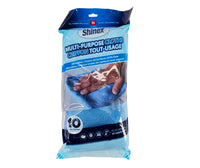
Synthetic woven or knit fabric, typically 80/20 polyester/polyamide blend, 200 to 400 GSM. The premium category. Used dry or wet, designed for streak-free finish, low lint, and long service life.
Pro: best surface clean. Lowest lint. Highest absorbency. Color-coded by zone. Reusable up to several hundred wash cycles if cared for. Con: highest up-front cost. Requires a laundering protocol or a microfiber rental program. Cannot be washed with bleach without degrading fibers.
4. Nonwoven (Sontara, DRC, airlaid)
Engineered disposable wipers. Higher performance than paper, lower cost than microfiber per wipe.
Pro: very low lint. High absorbency. Often food-safe rated. Excellent for cleanroom, food plant, electronics, paint prep, oil and solvent wiping. Con: more expensive per wipe than paper. Not reusable.
Specs that decide actual performance
Three specs separate good wipers from bad ones inside any category.
- Lint level. Critical for food, pharma, electronics, optical, and paint prep. A high-lint wiper can fail a swab test in a cleanroom. Look for "low-lint" or "controlled lint" rating, or ask for the lint shed test results.
- Absorbency (g/g). Grams of fluid absorbed per gram of wiper. Microfiber sits at 5 to 8 g/g. Paper sits at 2 to 4 g/g. Nonwoven varies widely. If you wipe spills, absorbency drives wipes-per-spill.
- GSM (grams per square meter). Fabric weight. Higher GSM means more fabric per wipe, which usually means longer life and more absorbency, but also higher cost.
Wet versus dry application

This is the spec that separates color-coded plant operations from general facility cleaning.
- Dry wiping: dust, debris, light residue. Microfiber dry wipes are the gold standard. Avoid rags here. Lint is the enemy.
- Wet wiping with sanitizer or quat: the wiper has to be compatible with the chemical. Microfiber wipers absorb quat through cation exchange and can deactivate sanitizer below the labeled ppm. For wet sanitizing in food contact, switch to a charged-quat compatible nonwoven or use a dedicated dispense system.
- Wet wiping with degreaser or A8 chemistry: paper wipers usually sufficient. Microfiber overkill.
- Wet wiping with solvent: nonwoven engineered for solvent. Don't use cotton or paper.
Color-coded zoning for food and clinical sites

If you operate a CFIA-regulated facility, a hospital, a long-term care home, or a clinical lab, color-coded wipers aren't a nice-to-have. They're the way you show an auditor that cross-contamination control exists.
The standard four-color system:
- Red: high-risk biohazard zones (washrooms, blood spills, raw protein contact)
- Yellow: medium-risk (general washroom surfaces, food prep mid-zones)
- Blue: general facility, low-risk surfaces
- Green: food contact, finished product zones
We stock four-color microfiber and four-color nonwoven across our line card. Match the color to the zone, document the SOP, train the team. Auditors notice. The chemical side of the same audit is its own checklist, and we walk through it in our audit prep post.
Cost-per-wipe math
The right metric is cost per actual wipe completed, not case price. (The same logic shows up on commercial paper as cost-per-thousand-sheets, which we cover in our toilet paper buying guide.)
A microfiber rag at three dollars that completes a 200-square-foot floor wipe in one piece beats a one-dollar paper bundle that takes ten sheets to do the same area. A laundered microfiber program at twelve cents per wipe over 200 wash cycles beats a fifteen-cent disposable nonwoven if your laundry cost is tight.
Run the math on the actual usage you have, not on case-to-case comparison.
Common mistakes
- Using microfiber for sanitizer wipe-down without realizing the quat is being deactivated.
- Buying the cheapest paper wiper and ending up using three sheets per spill because the absorbency is low.
- Mixing color-coded wipers across zones because the dispenser was empty (this will fail an audit).
- Storing microfiber in the same laundry load as cotton rags. The lint contaminates the microfiber.
- Using single-fold paper towels as wipers (they're too thin for most cleaning tasks).
What we'd quote
Send your wiper list and tell us:
- The application (dust, sanitizer wipe, oil pickup, solvent, food contact, glass)
- The facility type (food plant, clinic, hospitality, manufacturing, property)
- Whether laundering capacity exists or you need disposable
Our buyers will return a side-by-side spec comparison with cost-per-wipe math, lint and absorbency ratings, and notes on chemical compatibility. If you're running a CFIA, FDA, or NSF audit cycle, we'll flag the wipers that meet the audit standard and the ones that won't.
Janitorial wipers are a small SKU until they're not. The right wiper, paired with the right chemistry and the right zone, cuts your monthly chemical bill and keeps you out of audit findings. The wrong one shows up later as complaints from your cleaning team or a failed swab test on a bad day. Better to pick once, write it into your sanitation SOP, and move on.
Related reading
- Eight real reasons GTA operators are switching janitorial suppliers is the procurement-side pillar this guide sits inside.
- How to choose commercial toilet paper for your GTA restroom runs the same kind of spec and cost analysis for the paper category.
- How to prepare for a CFIA or customer audit without the last-minute cleaning chemical scramble is the audit-day checklist for the chemical and SDS side.
Clean Care Supply is a Toronto-area janitorial-supply distributor serving food manufacturers, property managers, daycares, restaurants, and commercial cleaners across the GTA. Trade accounts are reviewed individually. Send your supply list to quotes@cleancaresupplies.ca or use the quote form on the site.